

VAHL – Advanced Education in Veterinary Medicine at an International Level

Learn with VAHL – certified, university-based, internationally recognized.

CCRP -Certified Training in Canine Rehabilitation Therapy

Advance your veterinary expertise in canine phyisiotherapy - evidence-based, practical and internationally respected. Start now
Learn more!

CERP – Equine Rehabilitation for Veterinary Professionals

Learn evidence-based rehabilitation concepts for horses – scientifically grounded, clinically focused, and internationally accredited. Start now
Learn more!

CCFT – Functional Fitness & Injury Prevention for Dogs

Become a certified canine fitness expert – for trainers, therapists & professionals in prevention, rehab and sports performance. Start now
Learn more!

VMPT – Veterinary Training in Physical Therapy Techniques

Learn modern physical therapy methods for clinical rehabilitation – science-based, practice-oriented and developed for veterinarians.
Start now
Learn more!

Welcome to VAHL

Scientifically grounded.
Practice-oriented.

VAHL provides specialized knowledge in veterinary physiotherapy, rehabilitation, and sports medicine – scientifically grounded, practice-oriented, and delivered to an international standard.

As an internationally recognized education partner, we combine scientific expertise, veterinary practice, and modern therapeutic approaches in certified academic continuing education programs for professionals in veterinary medicine, therapy, and training.

Learn more

Our Continuing Education Programs

VAHL offers specialized programs for professionals in veterinary medicine, therapy, and training – combining practical relevance with in-depth expertise.

Our focus areas include veterinary physiotherapy, rehabilitation, functional prevention, and modern training approaches for dogs and horses.

Explore our programs

News from VAHL

Our academic Programs

Reviews

Start investing in you and your team!

You are worth it!

Everyday is an oportunity,

Be better today than you were yesterday and remember that you will be even better tomorrow than you are today!


Available Now!

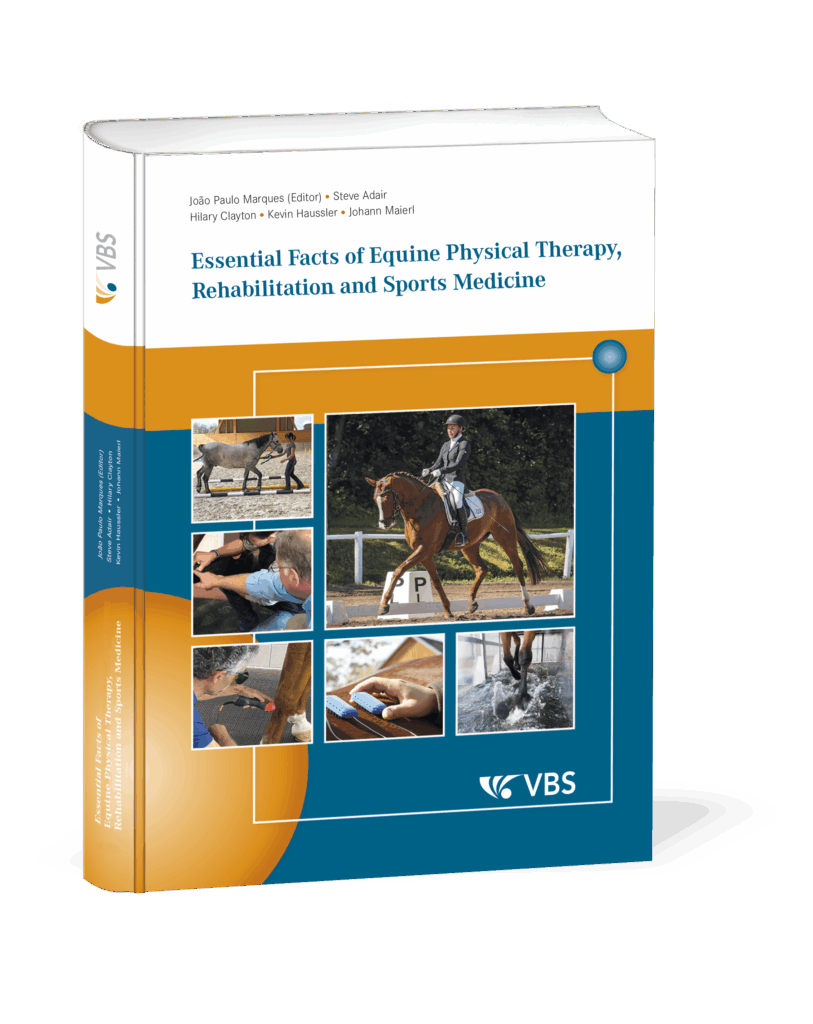
Essential Facts of Equine Physical Therapy, Rehabilitation and Sports Medicine

The international standard work for equine physiotherapy, rehabilitation and sports medicine!

With contributions from over 80 leading experts and university professors, this book offers in-depth, evidence-based knowledge for veterinarians, therapists, trainers, and students alike.

Edited by João Paulo Marques – a globally respected figure in equine sports medicine – this comprehensive resource is endorsed by top institutions worldwide.

Featuring over 1,000 illustrations, scientific highlights, and tutorial videos, it provides a dynamic and interactive learning experience covering all aspects of equine health and performance.

Now available in English and German!

Prof J.-M. Denoix
Prof J.-M. DenoixDVM, PhD, Founder ISELP, DACVSMR, DECVSMR
When I received the preprint of the book Equine Physical Therapy, Rehabilitation and Sports Medicine, I was immediately fascinated by its wide content, its didactic presentation making it easy to consult and the quality of illustrations. It is my great pleasure to introduce this book...
J.Brooks
J.BrooksMSc DO (Hons)
I can now throw away my veterinary library (almost!). This will delight my husband and ease the strain on the floor boards. The title of this book is long and so is the book, which covers every aspect of equine physical therapy ...
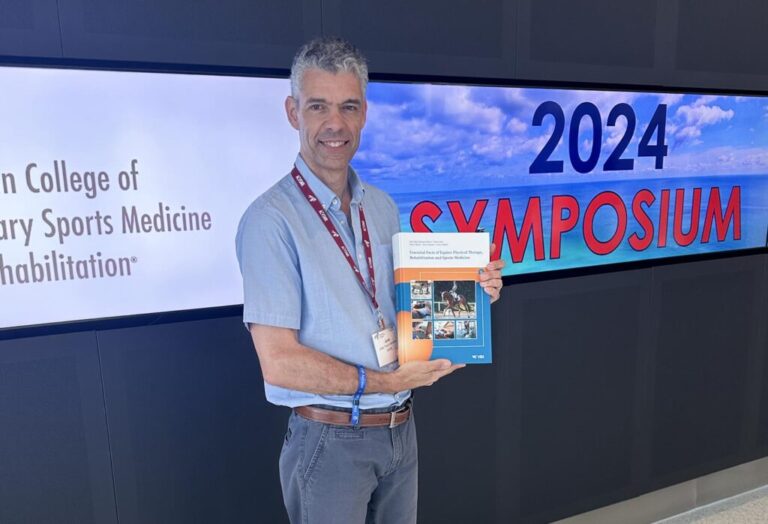
Congratulations, J. P. Marques!

We are excited to congratulate J. P. Marques, esteemed editing author of the groundbreaking new reference work “Essential Facts of Equine Physical Therapy, Rehabilitation, and Sport Medicine,” as well as a distinguished member of our CERP faculty, on being appointed as the Equine Physical Therapist Team Leader for the Olympic and Paralympic Games 2024.


Prof J.-M. Denoix
Prof J.-M. DenoixDVM, PhD, Founder ISELP, DACVSMR, DECVSMR
When I received the preprint of the book Equine Physical Therapy, Rehabilitation and Sports Medicine, I was immediately fascinated by its wide content, its didactic presentation making it easy to consult and the quality of illustrations. It is my great pleasure to introduce this book driven by world renown experts helped by a team of experienced clinicians and researchers providing a highly informative overview which covers a wide spectrum of clinical and professional fields in a very concise manner. The result is a reference and very instructive document for teaching veterinary students, residents in equine sports medicine and rehabilitation as well as equine practitioners working alone or in hospitals. I cannot retain my wholehearted congratulations to the editor, authors, and main authors for providing such an amount of updated knowledge. In volume of more than 800 Pages this encyclopedia first covers the most relevant aspects of the physiology and physiopathology of anatomical structures and tissues. This is followed by several didactic chapters on the anatomy, functional anatomy and biomechanics of the locomotor system nicely illustrated with clean dissections and clear drawings. Conformation, locomotion, and exercise physiology are then considered with the same concern of rigor and clarity. An adequate management always begins with a precise and complete diagnosis; this is why specific chapters are devoted to patient examination in the context of rehabilitation and diagnostic imaging, preceding the evaluation of the different causes of poor performance. Several chapters refer to horseman/womanship education and skills which may be essential in the management of riding difficulties. They include saddle evaluation, bridle, and bit fit, rider and horse interaction, asymmetry and laterality in horses interfering with athletic capacities. Considerations on nutrition and housing, essential contributors to the horse welfare and well-being are informatively presented before practical recommendations for training and conditioning. An essential portion of this book is dedicated to manual therapies, a core aspect of physical management of locomotor injuries and dysfunctions. Massage, lymphatic drainage, fascial manipulation, joint mobilization as well as chiropractic and osteopathy, techniques contributing to deepen the diagnostic knowledge of the patient with the objective of improving function, are considered. The use of a wide range of therapeutic and proprioceptive exercises at different gaits is then discussed as well as the biological effects and indications of treadmills, horse walkers and aquatic exercises. Several instrumental physical therapy modalities are reviewed considering their biological effects and indications; they include cryotherapy, heat, laser, therapeutic ultrasound, shock wave therapy, magnetic therapy, radiofrequency, nuclear magnetic resonance therapy and percutaneous needle electrolysis. Although there is still a lot to investigate to establish the most effective protocols and efficacy of these modalities, their use requires a closer and regular evaluation of the patient allowing to adjust exercise protocols which helps the horse and its owner to surpass their problems. The last part of the book provides a complete review of physical, functional, and medical modalities such as vibration therapy, kinesiology taping, acupuncture and regenerative therapies including hoof balance and shoeing, an essential part of the management of distal limb injuries. Key facts of the behavior and welfare of horses in rehabilitation are then presented. The final chapters end with the choice of the most adequate therapy considering the horse discipline and physical status and underline the essential adhesion of the owner/rider in a rehabilitation program. When I received the preprint of this book, it was like a revelation. I was convinced that new times were open for better care, consideration and management of the equine patient being either an athlete or a wonderful leisure companion or even a horse at the dawn of its life. This book is an extremely informative reference for equine practitioners and encourages a less invasive approach of the management of equine athletes, sometimes suffering from too many injections. The clinical examination is promoted rather than the overuse of diagnostic imaging modalities and physiotherapy rather than overmedication. This book provides the basis for going further to validate manual and instrumental modalities in the treatment and management of equine locomotor and medical conditions.
J. Brooks
J. BrooksMSc DO (Hons)
I can now throw away my veterinary library (almost!). This will delight my husband and ease the strain on the floor boards. The title of this book is long and so is the book, which covers every aspect of equine physical therapy but in a beautifully succinct way. The format has compelled the 80 plus authors of international renown to distil their thoughts and experience into a compact form. I only need to mention Clayton, Dyson, Haussler, Elbrond to name but a few, to give an idea of the quality of the input. Every paragraph is packed with information. However, if really short on time, stand-alone paragraphs headed “Important Facts” and “Research Highlights” give one instant access to some fascinating aspects of the chapter subject. Video clips are available to give visual reinforcement to the subject matter. To begin at the beginning, the anatomy, physiology and biomechanics section is superbly illustrated with some wonderful dissections, including the fascia. It discusses how these structures work on a macro and micro scale and where they impact on function in terms of gait analysis, lameness assessments and orthopaedics. Tack, dentition, hoof balance, nutrition and management, illustrated with useful practical check procedures, are followed by the complexities of training, conditioning and behaviour. Rehabilitation in its many forms is tailored to the case, be it an athletic or a geriatric horse, and the impact of the horse’s environment, behaviour and interaction with the owner/rider gives a wider view of equine care. The range of specific therapeutic interventions discussed is extensive, from acupuncture to taping, shock wave therapy to cupping and coming right up to date with regenerative medicine and biological treatments. While in the manual therapies section, the content in one’s own speciality may not have any big surprises, each section shows clearly where the disciplines sit within the therapeutic panoply. Describing the huge range of available treatments, it encourages a wider more collaborative approach to the care of horses. I make no apology for the abundant use of superlatives in this review. The editors and their team have put together an absolute feast for anyone working in this fascinating and endlessly varied field of endeavour.

Registrierung

Einloggen

Frame 427320380