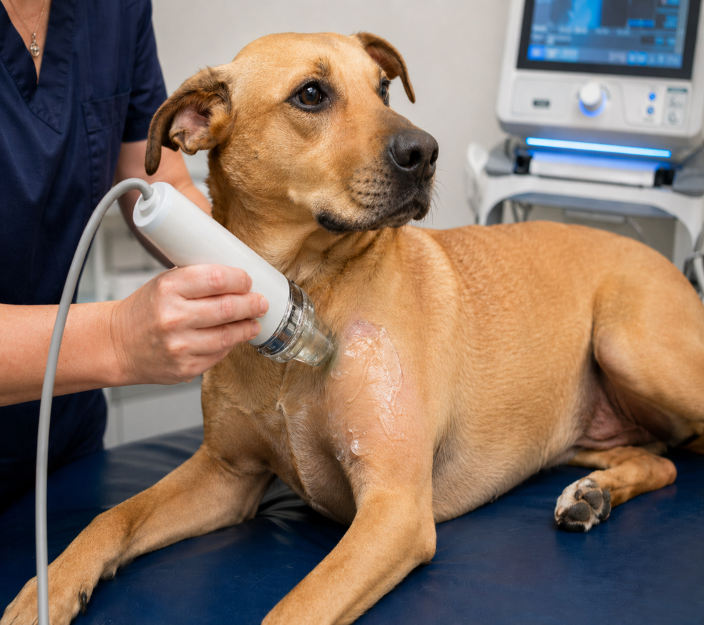
ESWT is gaining momentum as a tool for targeted orthopedic recovery
Recap
In veterinary medicine, extracorporeal shock wave therapy (ESWT) is used as a non-invasive physical modality to influence tissue-level processes relevant to clinical recovery. Established indications include
- pain modulation,
- support of tendon and ligament healing,
- stimulation of bone repair,
- and management of selected degenerative musculoskeletal conditions.
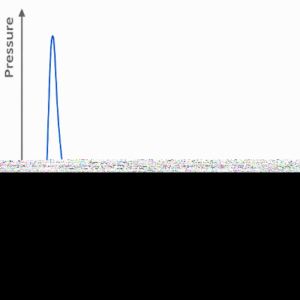
Shock waves are high-energy mechanical pressure waves characterized by a rapid rise in pressure followed by a negative pressure phase. In clinical use, they are transferred into tissue via a coupling medium and generate their strongest biological effects particularly at interfaces with differing acoustic impedance, such as the transition between soft tissue and bone. Common indications include osteoarthritis, tendon and ligament injury, and delayed bone healing.
What’s New
What is new is not ESWT itself, but where the field is heading: more targeted, better tolerated and more objectively measured applications in canine orthopedics and rehabilitation.
A particularly interesting example is the use of a novel piezoelectric ESWT device after tibial plateau leveling osteotomy (TPLO). In a recent prospective, blinded, sham-controlled clinical trial, 32 dogs were enrolled and 30 completed the study. Dogs received three ESWT or sham treatments immediately after surgery and at 2 and 4 weeks post-operatively. All ESWT treatments were completed without sedation, and no ESWT-related adverse events were reported.
At 4 weeks, dogs in the ESWT group bore significantly more weight at a trot than sham-treated dogs (p = 0.04), although this difference was no longer significant at 8 weeks and owner-reported pain/mobility scores and radiographic bone-healing measures did not differ significantly between groups. [1]
[1] Blinded, randomized, sham-controlled clinical trial assessing the efficacy of a novel piezoelectric extracorporeal shockwave device following TPLO. Frontiers in Veterinary Science, 2025