

VAHL – Weiterbildung für Tiermedizin auf internationalem Niveau
VAHL bildet Sie weiter – kompetent, international, universitätsnah
CCRP - Weiterbildung in Rehabilitationstherapie für Hunde
Profitieren Sie von einer international zertifizierten Fortbildung in Hunde-Rehabilitationstherapie – wissenschaftlich fundiert, praxisorientiert und auf höchstem tiermedizinischen Niveau. Jetzt durchstarten!
Hier mehr erfahren!
CERP - Ihre Fortbildung in Equine Rehabilitation
Profitieren Sie von einer international anerkannten Fortbildung in Equine Rehabilitation – fundiertes Wissen für die tierärztliche Praxis, evidenzbasiert, praxisorientiert und universitätsgestützt.
Click Here
CCFT - Weiterbildung in Hunde Fitness Training
Erwerben Sie fundiertes Know-how in Bewegungstherapie, funktionelle Prävention und Leisungstraining - speziell entwickelt für Hundephysiotherapie, Rega und Sporthundebetreuung. Jetzt durchstarten
Hier mehr erfahren!
VMPT - Tierärztliche Fortbildung in physikalischer Therapie
Erlernen Sie moderne physikalische Therapieverfahren zur gezielten Anwendung in der veterinärmedizinischen Rehabilitation – wissenschaftlich fundiert, praxisorientiert und universitätsgestützt. Jetzt druchstarten!
Hier mehr erfahren!

Wilkommen bei VAHL

Wissenschaftlich fundiert.
Praxisnah vermittelt.

VAHL vermittelt spezialisiertes Fachwissen in der veterinärmedizinischen Physiotherapie, Rehabilitation und Sportmedizin – wissenschaftlich fundiert, praxisorientiert und auf internationalem Niveau.

Als international anerkannter Bildungspartner verbinden wir wissenschaftliche Expertise, veterinärmedizinische Praxis und moderne Therapieansätze in zertifizierten akademischen Fort- und Weiterbildungen für Fachkräfte aus Tiermedizin, Therapie und Training.

Jetzt mehr erfahren

Unsere Weiterbildungsprogramme

VAHL bietet Programme für Fachkräfte aus Tiermedizin, Therapie und Training – mit klarem Praxisbezug und fachlicher Tiefe.

Im Mittelpunkt stehen veterinärmedizinische Physiotherapie, Rehabilitation, funktionelle Prävention und moderne Trainingsansätze für Hunde und Pferde.

Hier Kurse entdecken

Aktuelles von der VAHL

Unsere Kurse

Rezensionen

Investiere in dich und dein Team!

Ihr seid es Wert!

Jeder Tag ist eine Gelegenheit, 

Seid heute besser als gestern und bedenkt, dass Ihr morgen noch besser seid als heute!


Jetzt verfügbar:

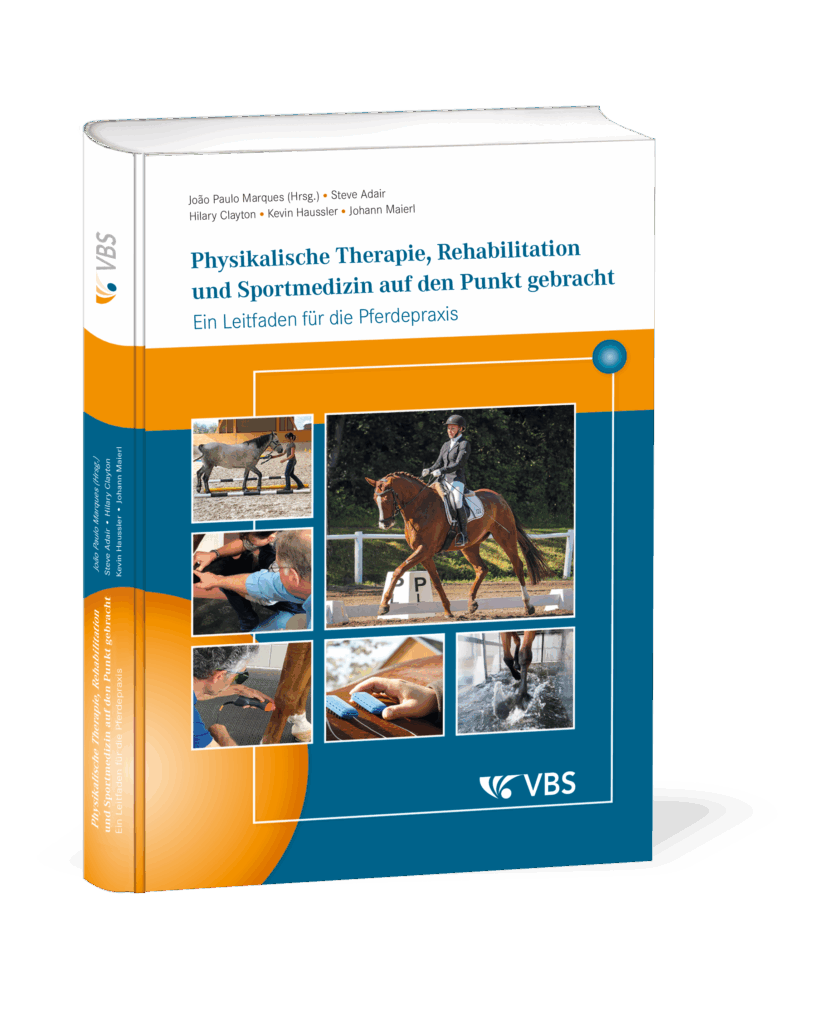
Physikalische Therapie, Rehabilitation und Sportmedizin auf den Punkt gebracht

Das internationale Standardwerk für Pferdephysiotherapie, Rehabilitation und Sportmedizin!

Mit Beiträgen von über 80 Expert:innen aus Tiermedizin, Wissenschaft und Sportpraxis bietet dieses Buch fundiertes Fachwissen für Tierärzt:innen, Therapeut:innen, Trainer:innen und Studierende.

Herausgegeben von Dr. João Paulo Marques und empfohlen von renommierten Universitäten weltweit – über 1000 Abbildungen, begleitende Lernvideos und kompakte Wissensmodule machen dieses Werk zu einer unverzichtbaren Ressource für jede Fachbibliothek.

Jetzt auf Deutsch und Englisch verfügbar!

Prof J.-M. Denoix
Prof J.-M. DenoixDVM, PhD, Founder ISELP, DACVSMR, DECVSMR
When I received the preprint of the book Equine Physical Therapy, Rehabilitation and Sports Medicine, I was immediately fascinated by its wide content, its didactic presentation making it easy to consult and the quality of illustrations. It is my great pleasure to introduce this book...
J.Brooks
J.BrooksMSc DO (Hons)
I can now throw away my veterinary library (almost!). This will delight my husband and ease the strain on the floor boards. The title of this book is long and so is the book, which covers every aspect of equine physical therapy ...
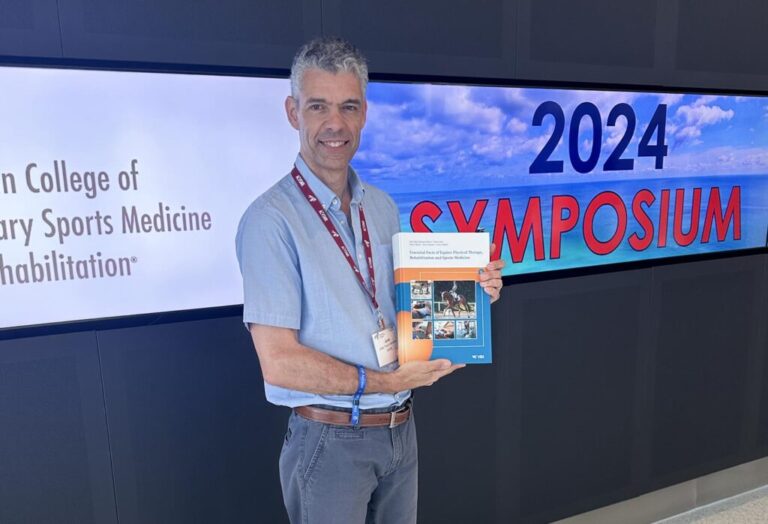
Herzlichen Glückwunsch, J. P. Marques!

Wir freuen uns, Dr. João Paulo Marques, den geschätzten Herausgeber des bahnbrechenden neuen Fachbuchs „Essential Facts of Equine Physical Therapy, Rehabilitation, and Sport Medicine“ sowie ein angesehenes Mitglied unserer CERP-Fakultät, zu seiner Ernennung zum Teamleiter der Physiotherapeuten für Pferde bei den Olympischen und Paralympischen Spielen 2024 zu beglückwünschen.


Prof J.-M. Denoix
Prof J.-M. DenoixDVM, PhD, Founder ISELP, DACVSMR, DECVSMR
When I received the preprint of the book Equine Physical Therapy, Rehabilitation and Sports Medicine, I was immediately fascinated by its wide content, its didactic presentation making it easy to consult and the quality of illustrations. It is my great pleasure to introduce this book driven by world renown experts helped by a team of experienced clinicians and researchers providing a highly informative overview which covers a wide spectrum of clinical and professional fields in a very concise manner. The result is a reference and very instructive document for teaching veterinary students, residents in equine sports medicine and rehabilitation as well as equine practitioners working alone or in hospitals. I cannot retain my wholehearted congratulations to the editor, authors, and main authors for providing such an amount of updated knowledge. In volume of more than 800 Pages this encyclopedia first covers the most relevant aspects of the physiology and physiopathology of anatomical structures and tissues. This is followed by several didactic chapters on the anatomy, functional anatomy and biomechanics of the locomotor system nicely illustrated with clean dissections and clear drawings. Conformation, locomotion, and exercise physiology are then considered with the same concern of rigor and clarity. An adequate management always begins with a precise and complete diagnosis; this is why specific chapters are devoted to patient examination in the context of rehabilitation and diagnostic imaging, preceding the evaluation of the different causes of poor performance. Several chapters refer to horseman/womanship education and skills which may be essential in the management of riding difficulties. They include saddle evaluation, bridle, and bit fit, rider and horse interaction, asymmetry and laterality in horses interfering with athletic capacities. Considerations on nutrition and housing, essential contributors to the horse welfare and well-being are informatively presented before practical recommendations for training and conditioning. An essential portion of this book is dedicated to manual therapies, a core aspect of physical management of locomotor injuries and dysfunctions. Massage, lymphatic drainage, fascial manipulation, joint mobilization as well as chiropractic and osteopathy, techniques contributing to deepen the diagnostic knowledge of the patient with the objective of improving function, are considered. The use of a wide range of therapeutic and proprioceptive exercises at different gaits is then discussed as well as the biological effects and indications of treadmills, horse walkers and aquatic exercises. Several instrumental physical therapy modalities are reviewed considering their biological effects and indications; they include cryotherapy, heat, laser, therapeutic ultrasound, shock wave therapy, magnetic therapy, radiofrequency, nuclear magnetic resonance therapy and percutaneous needle electrolysis. Although there is still a lot to investigate to establish the most effective protocols and efficacy of these modalities, their use requires a closer and regular evaluation of the patient allowing to adjust exercise protocols which helps the horse and its owner to surpass their problems. The last part of the book provides a complete review of physical, functional, and medical modalities such as vibration therapy, kinesiology taping, acupuncture and regenerative therapies including hoof balance and shoeing, an essential part of the management of distal limb injuries. Key facts of the behavior and welfare of horses in rehabilitation are then presented. The final chapters end with the choice of the most adequate therapy considering the horse discipline and physical status and underline the essential adhesion of the owner/rider in a rehabilitation program. When I received the preprint of this book, it was like a revelation. I was convinced that new times were open for better care, consideration and management of the equine patient being either an athlete or a wonderful leisure companion or even a horse at the dawn of its life. This book is an extremely informative reference for equine practitioners and encourages a less invasive approach of the management of equine athletes, sometimes suffering from too many injections. The clinical examination is promoted rather than the overuse of diagnostic imaging modalities and physiotherapy rather than overmedication. This book provides the basis for going further to validate manual and instrumental modalities in the treatment and management of equine locomotor and medical conditions.
J. Brooks
J. BrooksMSc DO (Hons)
I can now throw away my veterinary library (almost!). This will delight my husband and ease the strain on the floor boards. The title of this book is long and so is the book, which covers every aspect of equine physical therapy but in a beautifully succinct way. The format has compelled the 80 plus authors of international renown to distil their thoughts and experience into a compact form. I only need to mention Clayton, Dyson, Haussler, Elbrond to name but a few, to give an idea of the quality of the input. Every paragraph is packed with information. However, if really short on time, stand-alone paragraphs headed “Important Facts” and “Research Highlights” give one instant access to some fascinating aspects of the chapter subject. Video clips are available to give visual reinforcement to the subject matter. To begin at the beginning, the anatomy, physiology and biomechanics section is superbly illustrated with some wonderful dissections, including the fascia. It discusses how these structures work on a macro and micro scale and where they impact on function in terms of gait analysis, lameness assessments and orthopaedics. Tack, dentition, hoof balance, nutrition and management, illustrated with useful practical check procedures, are followed by the complexities of training, conditioning and behaviour. Rehabilitation in its many forms is tailored to the case, be it an athletic or a geriatric horse, and the impact of the horse’s environment, behaviour and interaction with the owner/rider gives a wider view of equine care. The range of specific therapeutic interventions discussed is extensive, from acupuncture to taping, shock wave therapy to cupping and coming right up to date with regenerative medicine and biological treatments. While in the manual therapies section, the content in one’s own speciality may not have any big surprises, each section shows clearly where the disciplines sit within the therapeutic panoply. Describing the huge range of available treatments, it encourages a wider more collaborative approach to the care of horses. I make no apology for the abundant use of superlatives in this review. The editors and their team have put together an absolute feast for anyone working in this fascinating and endlessly varied field of endeavour.

Registrierung

Einloggen

Frame 427320380