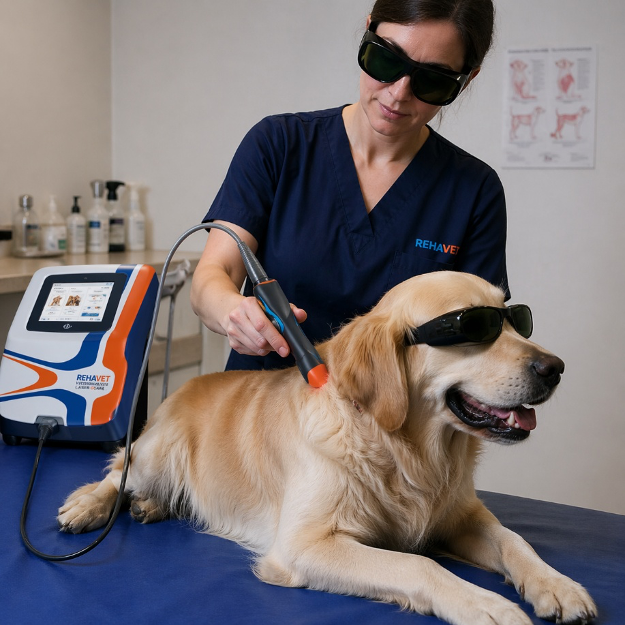
Recap
In veterinary medicine, laser therapy is used as a photobiomodulatory modality to influence cellular and tissue-level processes relevant to clinical recovery. Established indications include
- pain modulation,
- control of inflammation,
- reduction of edema,
- and support of tissue repair.
Therapeutic lasers typically operate within the red to near-infrared spectrum (approx. 650–1350 nm, the so-called therapeutic window), where tissue penetration is comparatively favorable. Clinically, laser therapy is widely used in cases such as osteoarthritis, soft tissue injury, wound healing, synovitis, and selected neurologic indications.
Its effects, however, are not defined by light alone. Wavelength, power, pulse form, dosage, and tissue characteristics all influence biological response and clinical outcome.
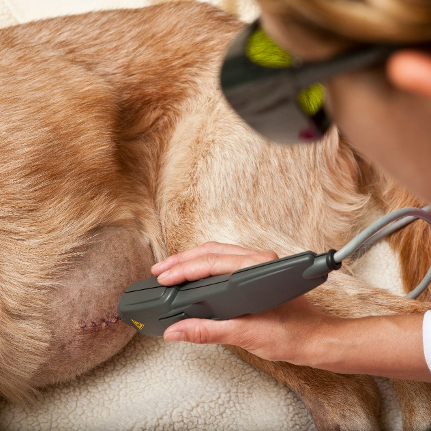
What’s New
What is new is not laser itself, but where the field is heading: targeted neurological applications.
A particularly interesting example is transcranial photobiomodulation in dogs with canine cognitive dysfunction (CCD). In a recent prospective case series, 5 dogs with moderate to severe CCD were treated over 60 days. Cognitive scores improved in 4/5 dogs after 30 days and in all dogs after 60 days, with mean score reductions of 27.6% and 43.4%, respectively. No treatment-related adverse effects were reported.[1]
[1] Sakovitch K. Transcranial photobiomodulation therapy improves cognitive test scores in dogs with presumptive canine cognitive dysfunction: A case series of five dogs. Open Vet J. 2024 May;14(5):1167-1171. doi: 10.5455/OVJ.2024.v14.i5.11. Epub 2024 May 31. PMID: 38938435; PMCID: PMC11199766